

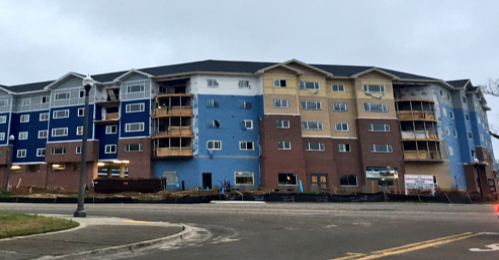
On Monday, April 13, the Leon County School Board received a presentation outlining the current and projected residential growth patterns across Leon County, highlighting the geographic distribution of new housing, development approvals, and long-term population trends that will influence school enrollment and facility planning. The analysis emphasized that residential growth in the community is steady, geographically concentrated in the east, and increasingly driven by large-scale master-planned developments.
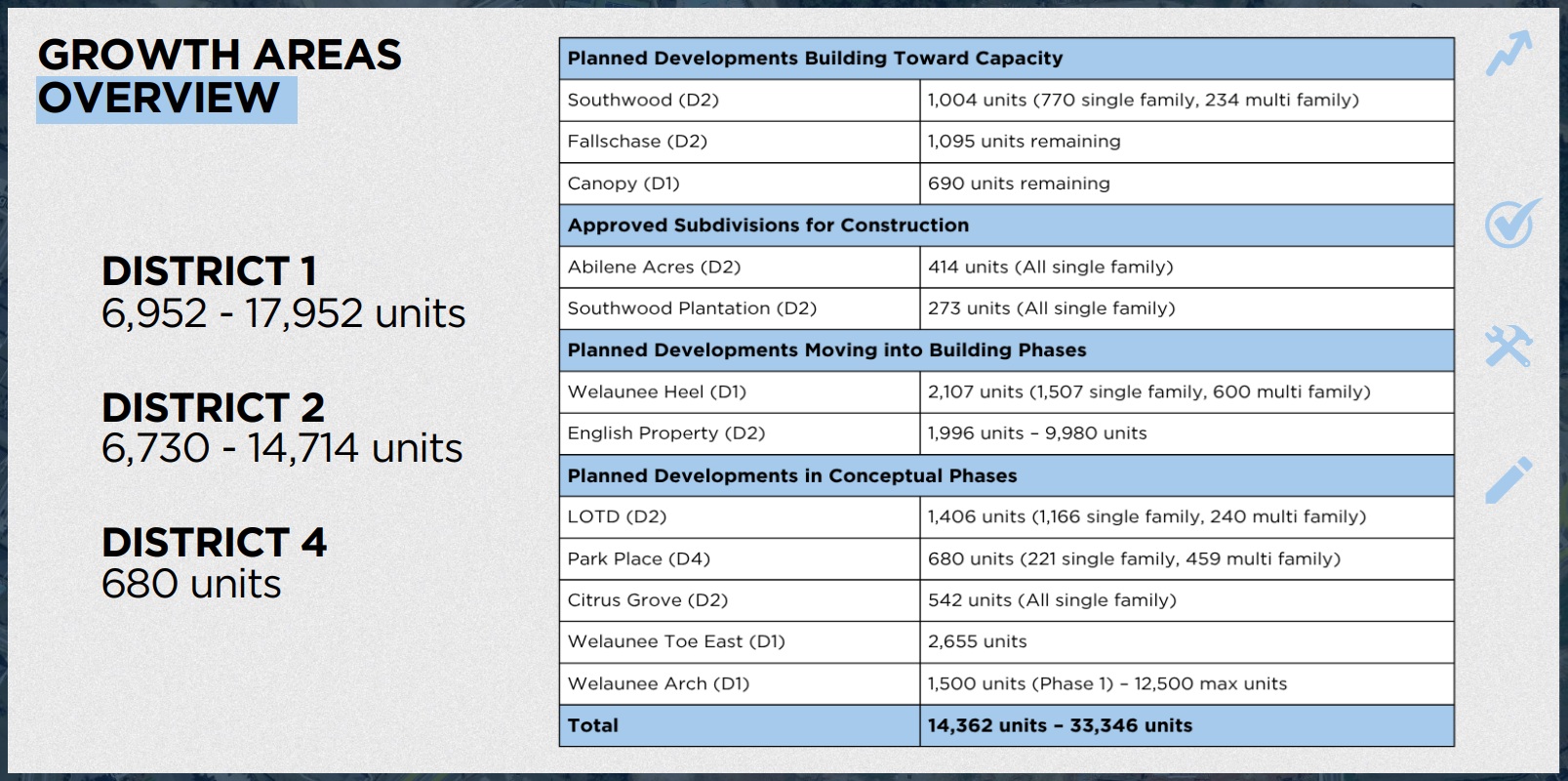
A central theme of the presentation was that growth in Leon County is not occurring evenly across the community. Instead, new housing construction is heavily concentrated in specific growth corridors, particularly in the northeast and southeast portions of the county. These areas include major planned developments in Welaunee area and surrounding residential projects, which are expected to add thousands of new housing units over time. Regional planning data shows that major developments alone could account for more than 7,000 new homes in the northeast sector, significantly influencing future student enrollment patterns.
The image below shows that future residential growth is concentrated in Leon County school districts 1 & 2.
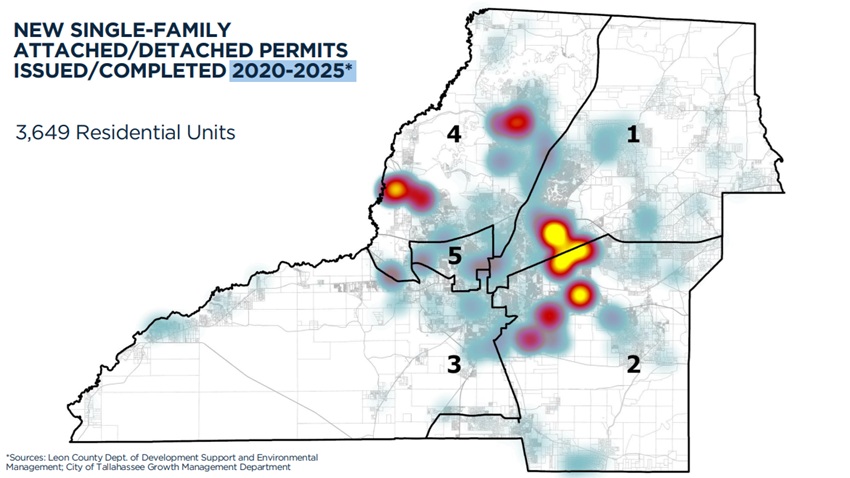
The presentation distinguished between three key measures used to track residential growth: development approvals, permitted units, and completed housing units. Development approvals represent long-term growth potential, while building permits serve as the most reliable indicator of near-term population increases. Permitting activity is especially important for school planning because it signals imminent household formation and enrollment demand. This framework allows planners and school officials to anticipate enrollment changes several years before new residents arrive.
Historical data presented in the slides shows that Leon County has experienced sustained population growth over the past several decades. The county’s population increased from approximately 192,000 residents at the time of the original Comprehensive Plan adoption to more than 292,000 residents by the 2020 Census.
Looking forward, the presentation indicates that residential development will continue at a moderate but consistent pace. Long-range projections anticipate the need for thousands of additional housing units by mid-century, reflecting both population growth and migration into the region. Local planning policies emphasize directing new development into designated urban service areas and encouraging infill development to maximize existing infrastructure and reduce pressure on rural land.
The presentation also highlights the importance of aligning school facility planning with residential development patterns. Because new subdivisions often generate concentrated enrollment increases within specific attendance zones, school districts must coordinate closely with local governments to ensure adequate capacity. In fast-growing areas, new schools or classroom expansions may be required to maintain acceptable class sizes and service levels. For example, officials note that constructing a new high school can exceed $100 million, underscoring the financial implications of growth-related infrastructure.
Another key finding is that residential growth is increasingly shaped by large-scale planned communities rather than small, scattered subdivisions. These developments typically include a mix of housing types, infrastructure, and amenities, allowing planners to better forecast population impacts. However, they also create localized enrollment spikes that require early coordination between land-use planners and school administrators.



Be the first to leave a comment on this article.