

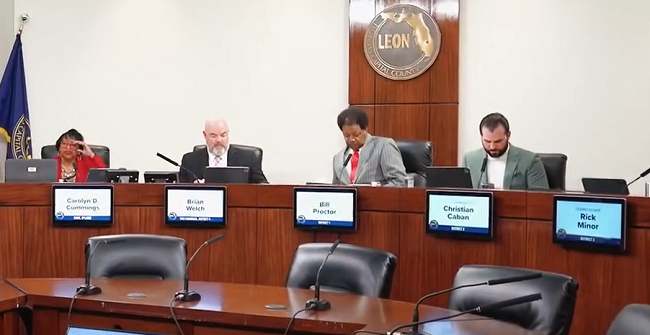
Leon County officials are preparing for a period of significant financial uncertainty as they begin developing the Fiscal Year 2027 budget while planning for the possibility of major property tax revenue reductions in future years.
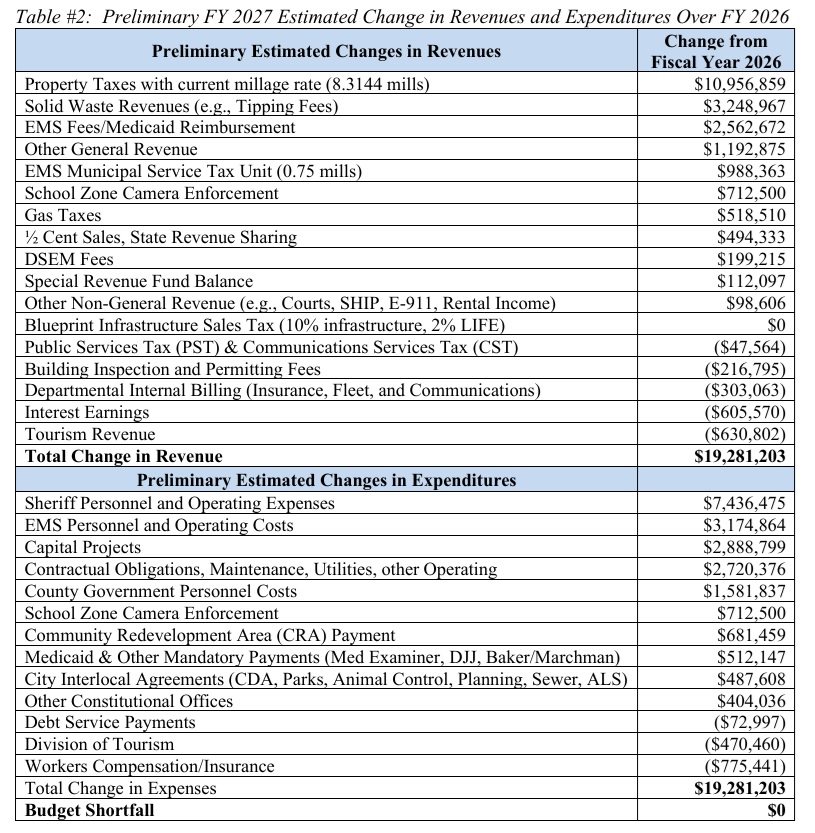
Documents prepared for an upcoming budget workshop reviewed the FY 2027 Preliminary Budget, which totals $420.8 million — a 4.8% increase over the current fiscal year budget. County officials described the upcoming budget year as a transition period designed to prepare for potential structural changes if voters approve a proposed constitutional amendment affecting property taxes.
The proposed amendment, approved by the Florida Legislature for the November ballot, would increase the homestead exemption and direct the Legislature to establish procedures to gradually eliminate homestead property taxes. It would also reduce the annual assessment cap on non-homestead property from 10% to 5%. County staff estimate the measure could reduce Leon County’s property tax revenue by approximately $71 million, or 30%, during the first two years of implementation.
In response, county administrators proposed immediate “stop gap” measures intended to preserve financial flexibility and avoid more severe cuts later. The recommendations include freezing hiring for non-essential positions, limiting non-essential travel and training, freezing discretionary community event sponsorships, and seeking participation from constitutional officers in similar cost-control efforts.
County officials said the measures are designed to maintain liquidity, reduce expenses, and provide time for a more deliberate review of county operations. The goal is to avoid widespread layoffs by leaving vacant positions unfilled and allowing the County Commission to evaluate staffing needs and service priorities.
The proposed FY 2027 budget also shifts the county’s capital program toward maintaining existing infrastructure rather than expanding capacity. Projects were evaluated based on whether they addressed critical maintenance, health, safety, or infrastructure needs. One example is the Main Library Essential Libraries Initiative expansion, where the planned project scope was reduced from $4 million to $200,000 so funds could be redirected to more immediate infrastructure priorities.
Officials noted the budget challenges are compounded by uncertainty over state-shared revenues, rising healthcare costs, inflation affecting contracts and capital projects, and potential state actions limiting local government revenue options.
A second budget workshop is scheduled for July 14, when county staff will present a more detailed implementation plan addressing potential organizational restructuring, revenue options, service priorities, and long-term financial strategies.

Be the first to leave a comment on this article.