

Mayoral Candidates Clash Over Economic Vision, Leadership Style
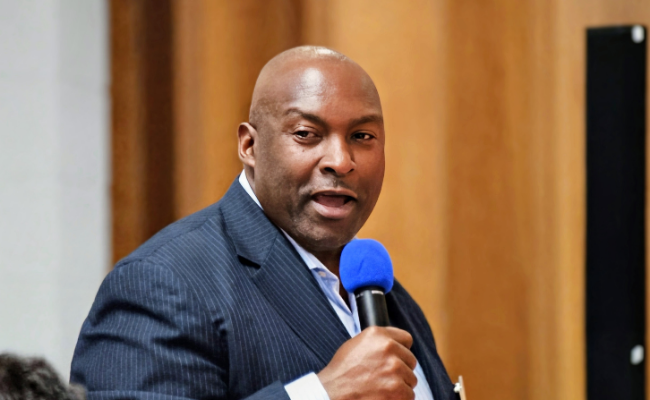
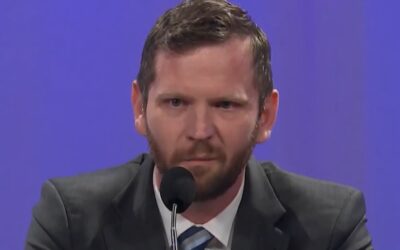
The race for Tallahassee’s mayor took center stage as candidates gathered at the Network of Entrepreneurs and Business Advocates (NEBA) June luncheon held at the Capital City Country Club. The candidates included former state lawmaker Loranne Ausley, current City Commissioner Jeremy Matlow and attorney and businessman Daryl Parks. Candidate Michael Foust, the only Republican in the field, did not qualify because he failed to meet campaign fundraising thresholds set by NEBA. However, Foust did attend the luncheon.
A straw poll conducted at the end of the forum – only NEBA members were allowed to vote – showed Parks with 51%, Ausley second with 27%, Matlow third with 15% and Foust fourth with 6.5%.
Civility
The forum began with a focus on the tone of local government. Ausley, drawing on her 14-year tenure in the Florida legislature, argued that Tallahassee has spent “too much time on conflict, controversy, and saying no”. She positioned herself as a candidate of “maturity and leadership” capable of bringing people together to focus on jobs and economic growth.
In contrast, Commissioner Jeremy Matlow leaned into his role as a reformer. In his closing remarks, he acknowledged that some may view him as “radical” for “calling out a closed-door system,” but he framed his approach as “shining a light in a dark room” to ensure the city commission represents the community. Daryl Parks, a self-made business owner and lawyer, emphasized the need for a “fresh mindset”, promising a leadership style rooted in collaboration and accountability.
Economic Development
When asked about the industries best suited for Tallahassee’s future, Matlow identified technology, healthcare, and tourism as the three primary areas for advancement. He argued that the mayor’s role is to be the “face of our city” for prospective companies, addressing the “difficult” permitting culture that currently hampers business growth. Ausley emphasized the importance of utilizing local powerhouses like FSU, FAMU, and the Mag Lab to drive the economy forward. Parks, meanwhile, welcomed the Chamber’s proactive stance and suggested that OEV needs a “rethink,” perhaps modeling it after successful economic initiatives in other regions, such as Santa Rosa County.
Infrastructure and Blueprint Priorities
A sharp divide emerged regarding the Blueprint Intergovernmental Agency’s funding. Commissioner Matlow argued for prioritizing basic infrastructure, such as paving dirt paths in neighborhoods where children walk to school. He explicitly opposed “luxury projects” like the Airport Gateway, which he claimed lacks significant economic upside. Matlow is also on record opposing the Northeast Gateway.
Daryl Parks, citing his experience in the hospitality and airport business, strongly disagreed, stating that “roadways play a critical part of what happens around airports” and can strategically enhance surrounding properties. Ausley took a historical perspective, comparing modern infrastructure concerns to the past development, arguing that “with growth we need to be talking about the right type of infrastructure”.
The conversation turned to the FSU-TMH academic health center, a partnership all three candidates generally supported, albeit with different caveats. Parks viewed it as a “unique opportunity” to improve health outcomes and potentially secure a Level 1 Trauma Center for the region. Ausley called it a “world-class academic medical center” that would attract top physicians and researchers, though she emphasized the importance of protecting charity care and maintaining transparency. Matlow, who voted against the sale of hospital assets to FSU, also supported the creation of FSU Health, linking better healthcare outcomes directly to a stronger local economy.
Addressing the Housing Crisis and Wages
As housing costs rise and wages stagnate, the candidates proposed varied strategies. Matlow advocated for increased density in the urban core, particularly on “asphalt parking lots” and “outdated retail uses,” to attract young graduates. Parks pointed to the building permitting process as a primary factor in high housing costs, promising to work on lowering these barriers. Ausley highlighted her legislative record of funding affordable housing and pointed to projects like the Orange Avenue development as models for “smart infill” and mixed-income communities.
Public Safety and Violent Crime
On the issue of public safety, candidates agreed that the solution lies in a mix of enforcement and social intervention. Parks emphasized youth intervention and linked crime directly to a lack of economic opportunity. Ausley focused on community policing and improving the trajectory of residents in neighborhoods like South City through education and healthcare.
Matlow noted that the city commission had already allocated $1 million toward these efforts but argued that the city must address its “25% poverty rate” to truly solve the crime problem. He also pointed to the high rate of guns stolen from unlocked vehicles as a specific issue requiring community action.
The Lightning Round: Quick Takes and Personal Insights
A “lightning round” provided a glimpse into the candidates’ immediate priorities and personalities:
- Police Chief Grade: Ausley gave Chief Lawrence Revell an “A,” Matlow a “B,” and Parks an “A”.
- Top Priority: Matlow chose infrastructure, while both Parks and Ausley chose jobs.
- Property Taxes: All three candidates opposed a statewide amendment to phase out most non-school homestead property taxes, with Matlow warning it would raise costs for renters and business owners.
- Mentors: Matlow cited a high school mentor, Parks named former FAMU President Frederick Humphries, and Ausley honored her father.
Closing Arguments
In their final appeals, the candidates reinforced their central themes. Daryl Parks positioned himself as a “self-made business owner” with the “independent capital” and “fresh mindset” needed to break eight years of perceived stagnation at City Hall.
Loranne Ausley concluded by highlighting her 25-year history of “building bridges” between parties to deliver results for Tallahassee, promising to bring “civility back” to the city she loves.
Commissioner Matlow argued that his experience as a pizza shop owner and his relentless push for transparency make him the right choice to lead from the top.



Be the first to leave a comment on this article.