

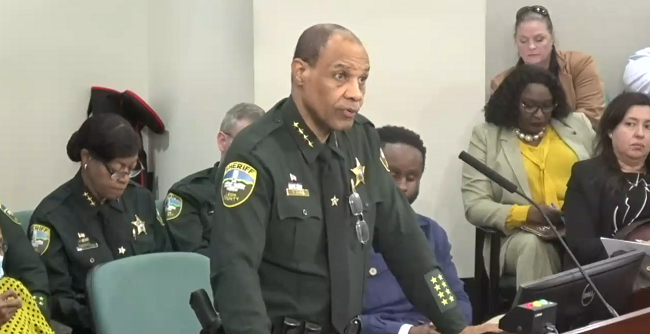
Leon County Sheriff Walt McNeil has suspended the Leon County Sheriff’s Office’s use of automated license plate recognition technology, a move that applies to license plate reader systems generally and is not limited to the controversial Flock Safety camera network.
The suspension is effective immediately and will remain in place pending additional oversight, guidance or regulation from law enforcement accrediting organizations, according to a release from LCSO.
McNeil’s decision follows his request to two law enforcement accreditation organizations — the Commission for Florida Law Enforcement Accreditation and the Commission on Accreditation for Law Enforcement Agencies — to develop standards governing agencies that use license plate recognition technology.
Specifically, McNeil is asking the organizations to require law enforcement agencies to regularly audit the use of license plate recognition systems and publicly report the findings of those audits.
The distinction between license plate recognition technology generally and Flock cameras is significant. Flock Safety is one provider of automated license plate reader technology, but law enforcement agencies can access or operate other systems capable of capturing and searching vehicle license plate information.
The broader suspension means LCSO is stepping away from the technology itself pending additional safeguards rather than simply discontinuing its use of a particular vendor or camera network.
“License plate recognition technology has proven to be a valuable law enforcement tool, helping investigators solve crimes, locate missing and endangered persons, recover stolen vehicles and identify suspects who might otherwise be difficult to find,” McNeil said.
However, McNeil said those benefits must be weighed against the need for accountability over how the systems are used.
“However, the value of this technology does not eliminate our responsibility to ensure it is used appropriately and with strong safeguards in place,” McNeil said.
The use of automated license plate readers has drawn increasing scrutiny over privacy, data retention, information sharing and the ability of law enforcement agencies to search large databases containing records of vehicle movements.
McNeil said LCSO will wait for stronger oversight measures before resuming use of the technology.
“Until additional oversight and accountability measures are established, I believe suspending our use of this technology is the responsible course of action,” McNeil said. “Public safety and public trust must go hand in hand.”
LCSO said it will continue working with accreditation organizations and monitoring the development of standards and guidance governing the use, auditing and oversight of license plate recognition technology.


Be the first to leave a comment on this article.