

Inman-Johnson campaign acknowledges using “Negroes” in radio advertisement suggesting Black elected officials cannot make independent decisions.
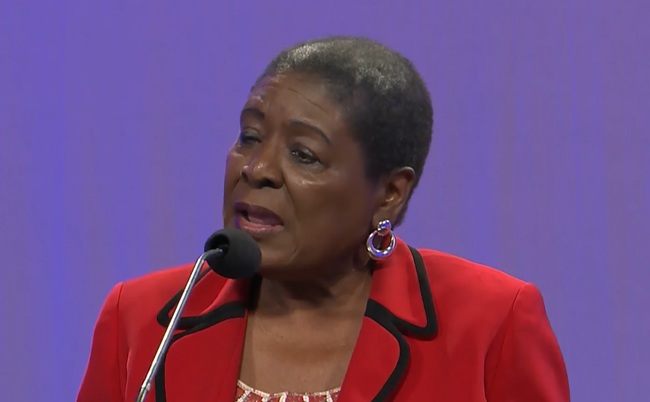
Tallahassee City Commission candidate Dot Inman-Johnson’s campaign has acknowledged using the racially outdated term “Negroes” in a radio advertisement attacking incumbent Commissioner Dianne Williams-Cox, raising questions about the campaign’s portrayal of Black elected officials as individuals who cannot make independent decisions.
The controversy emerged after the Inman-Johnson campaign aired a 30-second advertisement narrated by her husband, Lee Johnson.
The advertisement stated:
“For years, rich developers have placed Negroes in office to do what they want and now they got Dianne Williams-Cox.”
The advertisement then promoted Inman-Johnson as an alternative in the November 3 election for City Commission Seat 5.
Williams-Cox strongly criticized the advertisement.
“We should be bringing people together—not dividing them by race or using degrading language to win an election”, said Williams-Cox.
She also rejected the allegation that developers control her decisions.
“I have never been anyone’s puppet,” Williams-Cox said. “No developer, special interest, political group or individual tells me how to vote. My decisions are based on what I believe is best for the people of Tallahassee.”
The Use of “Negro”
The language raises two separate issues: the campaign’s decision to use a racial designation associated with the segregation era and its suggestion that Black elected officials are not independent representatives of their constituents.
The advertisement did not simply accuse Williams-Cox of supporting policies favored by local business interests. Instead, it placed her within a broader racial category of elected officials allegedly installed to take direction.
That framing carries an implication that Black officeholders lack political independence and exercise authority at the direction of others. The advertisement offered no specific evidence supporting its sweeping allegation about Black elected officials.
The campaign’s response to the radio ad also drew attention.
Lee Johnson acknowledged narrating the advertisement and confirmed that he had withdrawn it following complaints.
“I have pulled the radio ad in case some people got offended by the word ‘Negro,’ which is a name we were called back in the 50s and 60s,” Johnson told the Democrat.
His statement acknowledged the term’s association with the 1950s and 1960s, a period when Black Americans faced legally enforced racial segregation and widespread discrimination.
However, Johnson did not explain why the campaign selected that terminology or address the broader implication that Black elected officials are controlled by developers.
When asked why he used the word, Johnson declined further comment.
Inman-Johnson also declined to comment on the advertisement, according to the Democrat. Her husband told the newspaper, “She has no comment at all.”
The commercial included a disclaimer identifying Inman-Johnson’s campaign as its sponsor.
While criticism of developer influence is a legitimate political issue, the advertisement went further by suggesting that Black elected officials have historically been placed in office to follow the instructions of wealthy interests.
The Inman Johnson campaign has not publicly explained the basis for that allegation or why it chose to make race a central element of its attack on Williams-Cox.




Be the first to leave a comment on this article.