

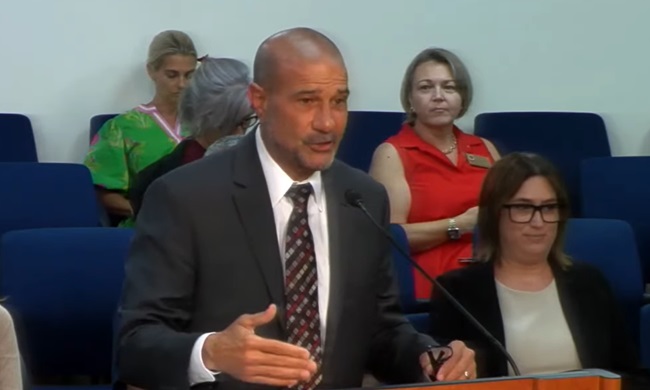
The Leon County School Board unanimously approved a $30 million short-term loan Tuesday to meet payroll obligations, but the discussion quickly shifted from the immediate cash shortage to a more troubling question: Will the district have to borrow again next year?
Leon County Schools Chief Financial Officer Kathy Sanders told board members the district likely will have to seek a loan next year because of its financial outlook. Monthly payroll expenses total approximately $22 million.
The Tax Anticipation Note will be provided by Capital City Bank at a 3.95% interest rate and will become available Oct. 15. The district expects to repay the borrowing after property tax revenues begin arriving in December.
The loan comes as district reserves have declined and officials acknowledge additional spending reductions will be necessary.
School Board member Alva Smith, who supported the loan, offered one of the most direct assessments of the district’s financial condition.
“The reason we’re here is because we are spending more than we’re making,” Smith said.
Smith said Leon County Schools has never before needed such borrowing and called for spending reductions that would prevent the district from making the loan an annual practice.
The district’s 2026-27 budget totals $629.4 million, nearly $18 million below the previous year’s spending plan, according to the Democrat. More than $5 million in reductions were made over the past year.
Superintendent Rocky Hanna acknowledged that additional reductions will be required and described the district as being in its worst financial position in a decade.
“Do we have a funding issue? Yes, we absolutely do,” Hanna told board members. “Do we need to continue to make cuts? Yes, we absolutely do.”
The discussion also renewed a debate over declining enrollment and whether Leon County should consider consolidating under-enrolled schools.
Smith has previously advocated consolidation as a way to reduce operating costs and redirect money toward teacher salaries. She told the board that without controlling expenditures — potentially including consolidation — the district could continue borrowing to make payroll.
Board member Darryl Jones opposed that approach, arguing that closing or consolidating schools that have improved academically would amount to a temporary solution to a long-term financial problem.
Board Chairman Marcus Nicolas called for development of a multi-year financial strategy rather than treating the loan as an isolated event.
The debate represents a significant change from the district’s previous explanation of the borrowing.
Hanna had characterized the loan largely as a timing issue: Schools incur substantial expenses beginning in August while significant property tax revenue does not arrive until later in the year. In previous years, however, the district was able to bridge that gap by temporarily using available money from other district funds.
Those resources are no longer sufficient to comfortably cover the gap.
The board’s latest discussion indicates officials now expect the financial pressure to extend beyond this year’s seasonal cash shortage.
Any portion of the $30 million that is not needed for payroll is expected to be reinvested to offset future district expenses.
Hanna said the administration plans to bring forward proposals addressing the district’s finances at a December business meeting, ahead of the School Board’s January 2027 retreat.
“We will do our best to bring forward a plan to right the ship,” Hanna said, “to address our financial situation and to bring solutions.”




Be the first to leave a comment on this article.