

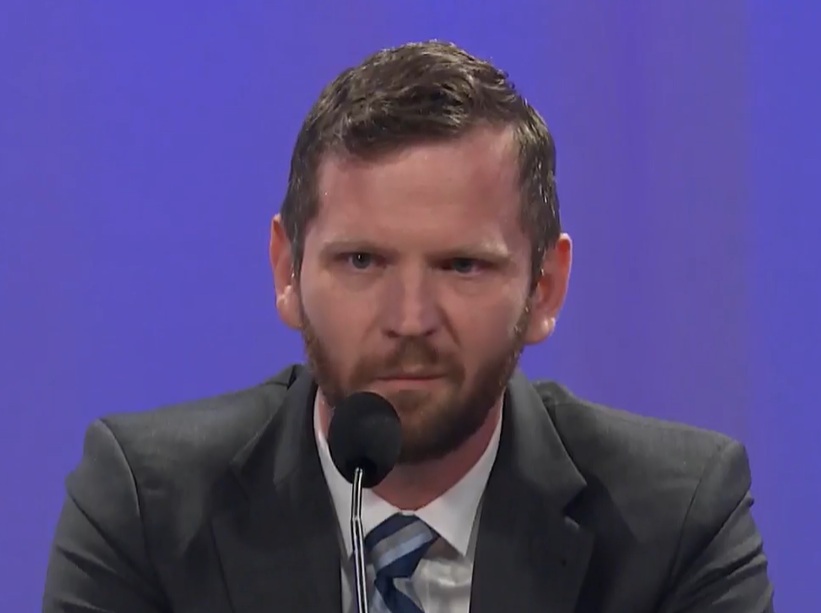
Late disclosure of major contribution raises questions about outside influence, Tallahassee’s energy policies and the timing of campaign finance reporting.
Tallahassee mayoral candidate Jeremy Matlow’s political committee, Friends of Jeremy Matlow, has received a $200,000 contribution from the California-based Green Advocacy Project, according to newly reported campaign finance information.
The contribution, disclosed less than a week before the November 3 election, brings renewed attention to the role of out-of-state environmental organizations in Tallahassee politics and their interest in influencing the future of the city’s electric utility.
The timing also raises questions about campaign finance transparency. With only days remaining before voters go to the polls, the late disclosure leaves limited opportunity for news organizations to investigate the contribution and for voters to evaluate the donor’s policy objectives.
However, without evidence of the donor’s or campaign’s intentions, it cannot be established that the contribution was deliberately timed to avoid press coverage.
Who Is the Green Advocacy Project?
The Green Advocacy Project, based in Palo Alto, California, was founded in 2017 by progressive political activist Michael Kieschnick, who also founded CREDO Mobile.
The organization supports political efforts aimed at reducing dependence on fossil fuels and accelerating the transition to renewable energy. Its leadership includes political operatives associated with national progressive campaigns, including Bernie Sanders’ 2016 presidential campaign.
This is not the organization’s first involvement in Tallahassee elections.
In 2024, the Green Advocacy Project contributed $150,000 to Matlow’s One Tallahassee political committee, which supported progressive candidates for City Commission. The organization has also contributed $200,000 to Lead Locally PAC between 2024 and 2026.
Why Is California Interested in Tallahassee?
One explanation involves Tallahassee’s city-owned electric utility.
Unlike communities served by investor-owned utilities, Tallahassee’s elected City Commission has significant authority over electricity generation, energy investments and utility policies.
The city’s electric generation system relies heavily on natural gas, making Tallahassee an attractive target for environmental organizations seeking to accelerate the transition to renewable energy.
In September, California-based Lead Locally endorsed Matlow and City Commission candidates Dot Inman-Johnson and P.J. Perez. The organization has specifically advocated a rapid transition to clean energy in Tallahassee.
Matlow has also received the endorsement of the Jane Fonda Climate PAC, another national organization supporting candidates committed to reducing fossil fuel use.
Matlow’s own voting record reflects his willingness to challenge existing natural gas commitments.
In February 2024, Matlow and Commissioner Jack Porter opposed extending a natural gas pipeline capacity agreement after utility officials warned that the capacity would be needed to meet customer demand.
Matlow instead sought a review of alternatives to natural gas. The proposed alternative failed, and the contract extension passed 3-2.
The disagreement highlights a potentially significant financial issue for Tallahassee residents.
Matlow has argued that transitioning to renewable energy could lower utility bills. Supporters of renewable energy also point to reduced fuel expenses and the potential for long-term savings.
However, accelerating that transition could require substantial investments in generation, battery storage and backup capacity. The impact on customer rates would depend on the cost and timing of those investments.
Questions About Timing
The $200,000 contribution is particularly noteworthy because of its proximity to Election Day.
Although late campaign contributions are permitted under applicable reporting requirements, disclosure shortly before an election can limit the time available for public scrutiny.
The distinction between when the contribution was received and when it was publicly reported is important. Establishing whether the timing was intentionally designed to minimize news coverage would require additional evidence.
The contribution also raises broader questions about what California environmental organizations expect from the candidates they support.
Matlow previously defended out-of-state contributions to his political committee, telling WFSU in 2024 that the financial support helped his political allies compete with opposing interests.
For Tallahassee voters, the central questions are why the Green Advocacy Project is investing another $200,000 in local politics, whether the contribution is connected to specific utility policy expectations, and how those policies could affect electric rates.
The answers could have consequences extending well beyond Tuesday’s election.


Be the first to leave a comment on this article.