

As families across Leon County gather around their dinner tables this Thanksgiving, residents of Bradfordville may be surprised to learn that their community shares a remarkable historical connection to the events that inspired one of America’s most cherished holidays.
The name Bradfordville can be traced back to Dr. Edward Bradford and his family, who settled in northern Leon County nearly two centuries ago. According to local histories and archival records, the family descended from William Bradford, the Mayflower passenger who helped establish Plymouth Colony and served as its governor during the famous harvest celebration of 1621.
The connection links the rolling hills of northern Leon County to one of the founding chapters of American history.
From Plymouth to the Red Hills
In 1620, William Bradford and his fellow Pilgrims crossed the Atlantic Ocean aboard the Mayflower in search of a new life. Their first winter in Massachusetts proved devastating, with approximately half of the passengers dying from illness and the hardships of establishing a settlement.
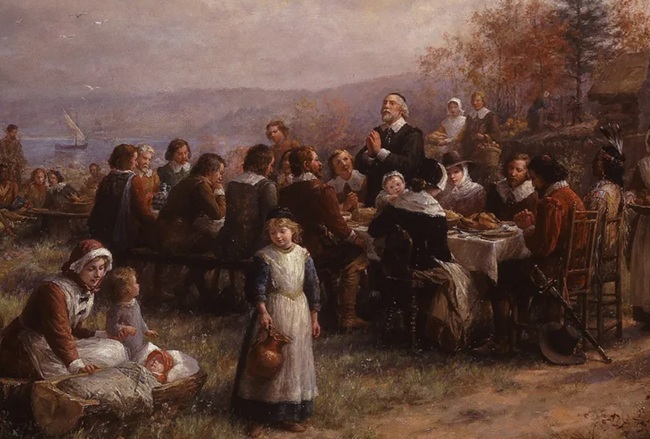
By the fall of 1621, the surviving colonists had gathered a successful harvest. Under Bradford’s leadership, the settlers participated in a three-day celebration attended by members of the Wampanoag people. The gathering would become widely recognized as America’s first Thanksgiving.
Over the following two centuries, branches of the Bradford family migrated south. According to published genealogical accounts, William Bradford’s great-great-grandson, John Bradford, received a land grant in Halifax County, North Carolina.
It was from that area of North Carolina that Dr. Edward Bradford journeyed to Florida around 1832, approximately 11 years after Florida became a United States territory and 13 years before it achieved statehood.
He was joined by other members of the Bradford family, including Thomas, Henry and Richard. Together, they established extensive agricultural operations in the fertile Red Hills of northern Leon County.
A Family That Left Its Mark
Dr. Bradford established Pine Hill Plantation and later Horseshoe Plantation near Lake Iamonia. His relatives established other plantations, helping shape the region’s agricultural economy, which relied heavily on enslaved labor before the Civil War.
The family also had ties to Florida’s early political history. Edward Bradford married Martha Branch, the daughter of John Branch, Florida’s last territorial governor.
The University of Florida maintains a collection of original Bradford family documents dating to the nineteenth century, including correspondence and plantation business records. The university’s archives specifically acknowledge the family’s Plymouth Colony ancestry.
Special & Area Studies Collections+1
Over the decades, Bradfordville evolved from a cotton-producing agricultural community into a region known for its quail hunting plantations and, eventually, a thriving residential community.
A Tallahassee Magazine article originally published in 1987 documented the community’s transformation, identifying the Pine Hill Cemetery, where Dr. Bradford and many of his descendants are buried, as one of the surviving reminders of the family’s local history.
Today, many residents travel along Bradfordville Road without knowing the national historical significance behind its name.
A Thanksgiving Connection
Interestingly, William Bradford’s own historical writings provide some insight into the foods available during the fall of 1621.
In his manuscript, Of Plymouth Plantation, Bradford recalled a successful harvest, abundant fish and a “great store of wild turkeys.”
Fellow Pilgrim Edward Winslow recorded the harvest celebration itself, describing how the colonists and approximately 90 men accompanying Wampanoag leader Massasoit gathered for three days of feasting.
More than four centuries later, turkey remains the centerpiece of Thanksgiving celebrations in millions of American homes.
For Bradfordville residents, however, the holiday carries an additional historical connection.
The name on their road signs, schools and neighborhood businesses is a reminder of a family whose American story began aboard the Mayflower, continued through North Carolina and eventually became intertwined with the history of Leon County.


Be the first to leave a comment on this article.