


By Christine Sexton, Florida Phoenix
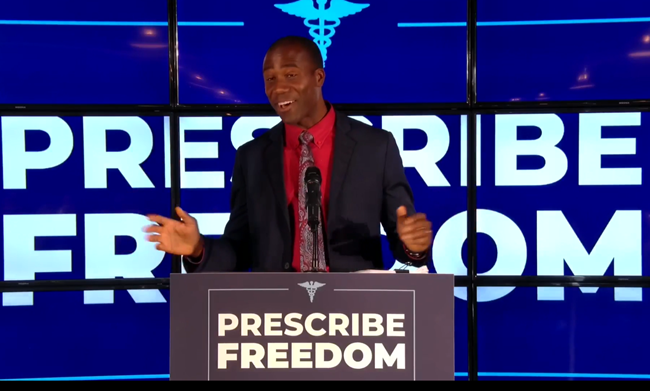
The push by Gov. Ron DeSantis and state Surgeon General Joseph Ladapo to repeal some of the state’s vaccine requirements for public schools and day care kicked off Friday with a lengthy and contentious hearing held in a hotel in Florida’s Panhandle.
Ladapo made the call to get rid of all vaccine mandates contained in both state rule and state law even though many of those mandates have been considered a public health success.
About 90 people attended the Department of Health three-hour public meeting on the proposed changes to Rule 64D-3.046, specifically removing the requirements for children to receive the hepatitis B, varicella (chicken pox), and haemophilus influenza B or Hib vaccine. The proposal would remove those vaccines, along with the pneumococcal conjugate vaccine, for admission to a licensed day care facility.
Emma Spencer, DOH division director for public health statistics and performance management, and facilitator of the meeting, described the workshop as an opportunity for “public input” as “part of an ongoing efforts to ensure the health and safety of Florida students and communities.”
And there was lots of input, ranging from medical professionals to parental rights advocates to those who questioned whether a measles outbreak is underway in South Carolina. More than 280 people are in quarantine there for measles after a significant influx in cases following the Thanksgiving holiday, Phoenix affiliate South Carolina Daily Gazette reports.
Susan Sweeten, chief marketing officer for the National Vaccine Information Center and a Florida resident, was first to testify. The center’s website says the group is “dedicated to preventing vaccine injuries and deaths through public education and advocating for informed consent protections in medical policies and public health laws.“
Sweeten said her son, just five hours old, was injured when he was given a hepatitis B vaccine in the hospital.
“When I questioned it, she said, ‘If you don’t give your baby the vaccine, your pediatrician won’t see him, and you won’t know if he’s deaf, dumb, or blind,’” Sweeten told the DOH panel. “This is not informed consent. That is coercion. Vaccines should never be tied to a child’s education. Nothing that pierces the skin should ever be used as leverage over a child’s opportunity to education and to learn,” she said.
Doctors who showed up insisted vaccines work and that elimination of the mandates would lead to a resurgence of controllable childhood diseases.
“As a pediatric infectious disease physician, I cared for children before the varicella vaccine and saw ‘simple chickenpox’ turn into pneumonia, encephalitis, and needless hospitalizations — outcomes we can now prevent because of vaccines,” said Dr. Nectar Aintablian, a pediatric infectious disease specialist in Tallahassee. “Vaccines are victims of their own success; because they work, we forget the suffering they avert.”
Rick Frye, another Florida resident, said he’s been beseeching people not to vaccinate their children for about the past 20 years.
“Now, any pediatrician in this room who tells you that a kid needs 80 shots shouldn’t be trusted to put a band aid on a kid’s knee,” he said. “It’s obviously about freedom, but it’s also about the children these pediatricians damage because they get paid to to vaccinate these kids.”
More hearings coming
The meeting was the first one held on the proposed changes, but likely won’t be the last given the administrative rulemaking process and the requirements for public input.
The department did not say when the next meeting will occur, only that it would be announced in advance in the Florida Administrative Register.
DOH staff asked that public comment on the proposed rule changes be sent to the DOH at vaccinerule@flhealth.gov by Dec. 22, although Spencer acknowledged comments would remain open as the state works on the proposed changes.
The League of Women Voters of Florida didn’t focus on the science behind the vaccines, adverse reactions to vaccines, or parental rights. LWV representativeMary Winn focused her testimony instead on how the proposed changes conflict with the DOH’s statutory mission.
“This rule could probably be updated to reflect current practice and the responsibilities of the state, the Department of Health, private-practicing medical professionals, parents, and the public at large. But any changes must be consistent with the public health mission of the Department of Health as stated in Florida law,” she said.
Winn noted that statutes require the DOH to conduct a communicable disease prevention and control program, which includes school immunization programs. The agency is charged by statute to ensure that “all children in this state” are immunized against vaccine-preventable diseases, she said.
“Eliminating the mandatory requirement will result in lower levels of immunization, which is contrary to that law stating that you are responsible for all of the children to be vaccinated in the state,” she said.
‘Tremendous damage’
Dr. Frederick Southwick testified that he has been an infectious disease specialist for 45 years. Although he worked with adult populations for much of his career, Southwick recalled helping cover pediatric infectious diseases in 1983 and 1984, before introduction of the Haemophilus influenzae type b (Hib) bacteria, which would be eliminated under the DOH proposal.
“What did I see?” he asked.
Before the Hib vaccine, “I saw cases of orbital cellulitis, infections that went from the sinus causing bulging-eye blindness. I saw severe cases of pneumonia. I saw severe cases of otitis media. I saw bone infections, osteomyelitis that damaged the growth plate of the children so their bones could no longer grow. I saw sepsis, where patients got hypotension and died,” Southwick said.
“And the most feared was bacterial meningitis, and that had carried a 20% mortality. And this was the leading cause of deafness before the HiB vaccine. In 1985, the Hib vaccine came in, we went from 20,000 hospitalizations to 30, and today we don’t see any of those diseases. You are ending that vaccine. It’s going to cause tremendous damage.”
The proposed rule would change the existing religious exemption people can claim to refuse vaccines, removing language prohibiting exemptions based on personal or philosophical reasons.
Additionally, the proposed rule would allow parents, guardians, and college and university applicants aged 18-23 to decline to participate in documenting their vaccination status in the Florida SHOTS program, which is how the state collects vaccination data.
DeSantis and Ladapo made national headlines in September when they announced they’d like to eliminate all vaccine mandates from Florida statutes and rules, a move that could affect schoolchildren but also college students and even nursing home residents.
Ladapo said at the time that mandates drip “with disdain and slavery.”
The proposed rule only removes the vaccines the DOH has authorized through its rules. The proposal cannot eliminate the school vaccines mandated by statute.
The Legisalture’s reaction
To date there’s been no legislation filed on behalf of the DeSantis administration to eliminate vaccine mandates from Florida statutes. Even Republican U.S. Sen. Rick Scott distanced himself from the idea.
Meanwhile, Senate President Ben Albritton told reporters this week that he’s a believer in what he called “the vaccines of old,” but that he has never gotten an mRNA vaccine — used during the COVID-19 epidemic — because “he doesn’t trust the technology.”
He said he and his wife support parental rights.
“Missy and I believe we’re going to separate the mRNA stuff from the traditional stuff. And let’s be thoughtful about what works and what we know.”
Sen. Carlos Guillermo Smith, a Democrat from Orlando, is pushing a proposal (SB 626) to amend statutes to require the vaccines (hepatitis B, chickenpox, haemophilus influenzae type b, and pneumococcal disease) Ladapo is trying to eliminate via rule.
SB 626 has been referred to the Senate Health Policy, Education Pre-K – 12, and Rules committees.

Florida School Vaccine Tussle Kicks Off in Panama City Beach added by Robert Stewart on
View all posts by Robert Stewart →