
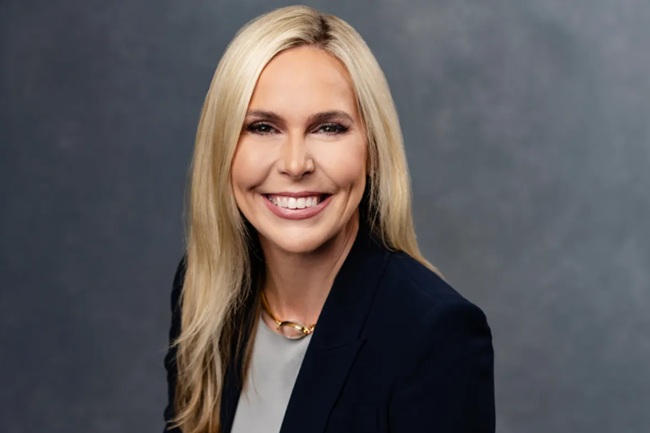


According to multiple reports, Trulieve CEO Kim Rivers played a pivotal role in shaping federal marijuana policy that culminated in President Donald Trump’s recent decision to support reclassifying marijuana from a Schedule I to a Schedule III drug — a major shift with potential lasting effects on the cannabis industry.
After years of advocacy by industry leaders, Trump signed an executive order in December 2025 directing federal agencies to begin the process of reclassification, a move that stops short of full federal legalization but signals a significant policy change. The decision followed an intensive 18-month lobbying effort involving cannabis executives, key influencers, and political operatives — with Rivers at the forefront.
Trulieve, based in Tallahassee, is one of the largest cannabis companies in the United States. Under Rivers’s leadership, the company has not only grown its market presence but also dramatically increased its political engagement, spending on federal lobbying and donating to political committees aligned with Trump’s administration. Documents show Trulieve contributed significant funds to Trump’s inaugural committee and associated political action committees, while Rivers personally raised the issue of rescheduling in private meetings with the president and influential fundraisers, including a $1 million-a-plate event at Trump’s New Jersey golf club.
Rivers framed the rescheduling effort as a matter of public health and scientific progress, emphasizing the medical benefits of cannabis and the need for robust domestic research. In public statements following Trump’s announcement, she praised the decision as “long overdue” and a “major milestone” for sensible cannabis reform, noting that recognizing marijuana’s medical applications under federal law supports regulated operators and law enforcement alike.
From a business perspective, the reclassification carries profound implications. Under the current Schedule I designation, cannabis companies have been barred from deducting ordinary business expenses such as payroll, rent, and utilities under Internal Revenue Code Section 280E, effectively imposing punitive tax burdens that have eroded profit margins across the industry. Analysts estimate that moving marijuana to Schedule III could eliminate these restrictions, resulting in billions of dollars in annual tax relief and dramatically improving cash flow for operators.
The change also removes significant barriers to clinical research by universities and pharmaceutical companies, potentially accelerating the development of new medical products and inviting greater institutional investment in the sector. While the reclassification does not resolve all federal issues — such as banking access or full legalization — it does signal a notable shift in federal policy that could reshape the competitive dynamics and financial viability of cannabis businesses nationwide.
As the industry adapts to these regulatory changes, Rivers’s role underscores how corporate leadership and strategic advocacy can influence national policy debates and drive outcomes with sweeping economic impact.

Tallahassee’s Kim Rivers had Major Influence on Trump’s Marijuana Decision added by Staff on
View all posts by Staff →
Y’all couldn’t be more wrong about this.
1) THC is currently legal both locally and federally thanks to a loophole in a prior farm bill. Products containing up to 3% THC may be purchased OTC but I do believe you have to be of-age. The solution to the strength limit has been to simply ingest more.
2) All of pharmacology starts in plants. We have missed out on decades of potential research into the compounds in these plants thanks to the overly strict classification. This change in classification isn’t about making it legal to buy a pack of 20 joints like a pack of cigs, but to make it easier to research the compounds and develop new medications.
I am a die hard Trump supporter and applaud what he has done so far to clean up the mess Biden and Obama left behind, but, I do not support the President’s action on this reclassification. This is very disappointing. This proves that money talks and IMO, puts children in harms way.
I do not support the President’s action on this reclassification. This is very disheartening and proves money talks, not common sense and not all the research that has already been done! What happened to the “War on Drugs”????
I could be wrong, but I believe that when you are written a prescription for a medicine which is a class three drug it will tell you how often to take the drug, how much to take at a time and who prescribed it.The package the drug comes in, and is supposed to be kept in, also lists who filled the RX, when it was filled and how many times it can be refilled. Hopefully these rules will be applied to MJ when it is reclassified as a schedule three drug from a strictly controlled class one drug?
Linda, nobody is doing that for weed. Nobody.
Next, you’ll be telling us about all the sweet babies you saved from drugs in halloween candy…
Wonder if Trump will be pardoning her husband??? ?
Will Kim Rivers, Obama, or Trump allow thier children to use or be raised by Maryjane mom and dads. Only if the money is worth it. Shame on all of you.
I personally spent my extra dollars on children in these home because their parents chose MJ over their children. Not related to me. No tax write offs for me. These parents traded food stamps for cash for vape store.
shame shame on all of you.
You wanna get Trump to do something for you, you gotta have that au-naturel Mar a Lago face going on!